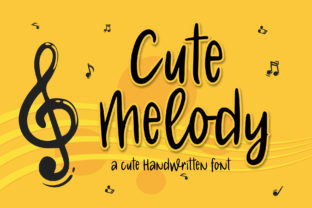
Cute Melody: A Sweet Handwritten Font for Creative Branding
There’s something oddly comforting about opening a blank brand board and letting the design process unfold. For a recent boutique identity project, I found myself staring at a white canvas, wondering which font would best capture the whimsical, handmade vibe of the client’s new line of artisanal candles. That’s when I pulled out Cute Melody. This sweet and fun handwritten font immediately felt like the right fit, bringing a softness and charm that matched the brand’s personality perfectly.
Cute Melody for Crafting a Handmade Brand Identity
Cute Melody is a Display font with a gentle, playful character that feels both modern and nostalgic. Its clean lines and soft curves make it ideal for projects that require a touch of warmth and personality. When I first tested it on a logo concept for the candle brand, I was struck by how it balanced approachability with elegance. It’s not too childish, nor is it overly formal—it sits somewhere in between, making it versatile enough to work across multiple brand touchpoints.
I used Cute Melody as the primary typeface for the brand’s packaging mockups, business cards, and social media headers. The font’s subtle variations in stroke weight added visual interest without overwhelming the design. On a printed card, it felt tactile and inviting, while on a digital platform like Instagram, it maintained clarity and readability even at smaller sizes.
Cute Melody for Social Media Graphics and Web Design
In the world of social media graphics, a font needs to be legible at a glance. Cute Melody excels here. I tested it on a series of Instagram posts featuring product shots and promotional text, and it consistently performed well. The font’s softness made it feel friendly and approachable, which aligned perfectly with the brand’s aesthetic.
On the website header, Cute Melody worked as a headline font, drawing the eye without being too bold or distracting. However, I noticed that its decorative elements could become less readable in small body text. For long-form content, I recommend pairing it with a sans serif font like Montserrat or Lato to maintain readability while still keeping the brand’s signature style present.
Cute Melody for DIY Projects and Crafty Creations
As someone who regularly works with crafters and DIY enthusiasts, I’ve seen firsthand how fonts can elevate a handmade project. Cute Melody is a standout choice for those looking to add a personal touch to their creations. Whether it’s a Cricut project, a custom greeting card, or a hand-painted sign, this font adds a layer of charm that feels authentic and heartfelt.
I recently used Cute Melody on a set of bakery packaging labels. The font’s playful nature made the designs feel more like a hand-drawn sketch than a mass-produced item. It helped create a sense of intimacy and care, which is essential for small businesses that rely on customer connection.
Cute Melody for Logo Design and Branding Consistency
Logo design is where a font can truly shine—or fall flat. When I was developing the logo for the candle brand, I experimented with several options before settling on Cute Melody. Its soft, flowing strokes gave the logo a handcrafted feel that resonated with the brand’s values. The font’s versatility allowed me to use it across different brand assets, from the logo itself to taglines and supporting text.
One thing to note is that Cute Melody works best as a display or accent font rather than a body text font. While it looks stunning in headlines and short phrases, it may not be the best choice for long-form content or formal corporate materials. For those looking to maintain consistency across all brand touchpoints, consider using Cute Melody alongside a more neutral, sans-serif font for balance.
Cute Melody for Font Pairing and Typographic Harmony
Font pairing is an art, and Cute Melody offers a great opportunity to experiment. When paired with a serif font like Cinzel or Playfair Display, it creates a contrast that highlights its handwritten charm. For a more modern look, combining it with a sans serif font like Inter or Raleway can add a fresh, contemporary edge.
If you’re working with other handwritten fonts, be mindful of how they interact with Cute Melody. Too many similar styles can feel cluttered, so it’s best to use it sparingly as an accent or highlight. In editorial design or creative studio identities, this font can serve as a visual anchor, helping to unify a diverse range of design elements.
Cute Melody for Commercial Use and Licensing Considerations
Before using any font in client work, it’s crucial to check the commercial licensing terms. Cute Melody is designed for use in branding, packaging, websites, and print-on-demand products, but always verify the specific permissions included in your purchase. This ensures that you’re using the font legally and responsibly, especially when working with clients who may have strict brand guidelines or distribution requirements.
Additionally, reviewing the font’s included styles, alternates, ligatures, and webfont availability can help you maximize its potential. If you’re planning to use it on a website, having access to webfonts ensures that the font will render consistently across devices and platforms.